Unhealthy Foods
Item Code : 001073
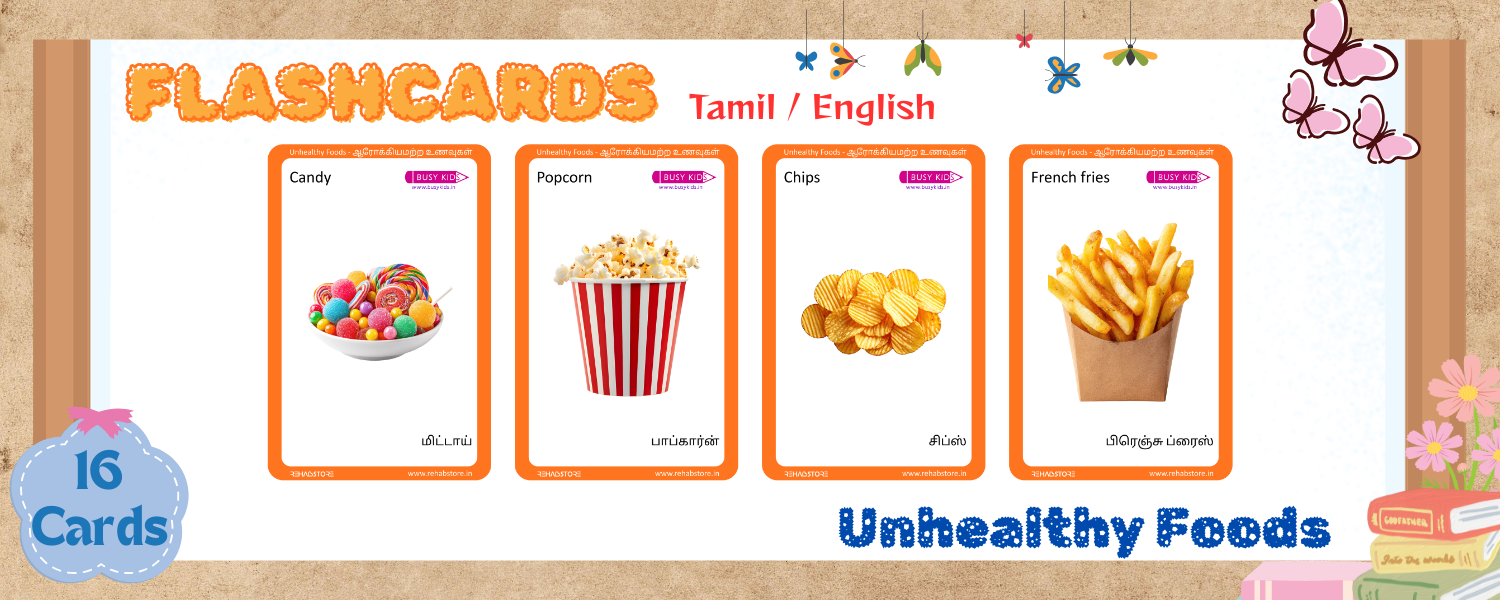
The Unhealthy Foods Flashcards are a fun and educational printable resource designed to help young children recognize foods that should be eaten only occasionally as part of a balanced diet. Each flashcard features a colorful, realistic illustration paired with a clear food name, making it easy for children to identify common unhealthy foods, build food vocabulary, and understand healthy eating habits from an early age. This printable set includes 16 Unhealthy Foods flashcards featuring French Fries, Candy, Popcorn, White Sugar, Processed Meat, Chips, Sandwich, Instant Noodles, Cake, Pizza, Fried Chicken, Burger, Sweets, White Bread, Donut, and Ice Cream.
These educational flashcards help children identify foods that are high in sugar, salt, or unhealthy fats while encouraging discussions about moderation and balanced nutrition. They support vocabulary development, observation skills, food recognition, and healthy lifestyle awareness through engaging visual learning.
Perfect for toddlers, preschoolers, nursery and kindergarten children, these flashcards are ideal for home learning, classrooms, homeschooling, daycare centers, speech therapy, occupational therapy, autism support, special education, and nutrition education. Parents, teachers, therapists, and caregivers can use them for food sorting games, healthy vs. unhealthy food activities, matching exercises, and nutrition lessons.
Designed with bright illustrations and an easy-to-print format, these Unhealthy Foods Flashcards make learning about food choices fun, interactive, and engaging for young learners.
What's Included
16 printable Unhealthy Foods flashcards
Bright, child-friendly food illustrations
Large, easy-to-read food names
High-quality printable PDF
Healthy vs. unhealthy food learning cards
Ready-to-print educational resource
Suitable for home and classroom learning
Interactive food recognition activities
Key Benefits
Helps children recognize unhealthy foods
Encourages healthy food choices
Builds nutrition awareness
Improves vocabulary and language skills
Develops observation and memory skills
Supports early science and health education
Ideal for speech therapy and special education
Enhances visual learning and food identification
Teaches balanced eating habits
Makes nutrition learning fun and interactive